
[datacenter_tag_image]
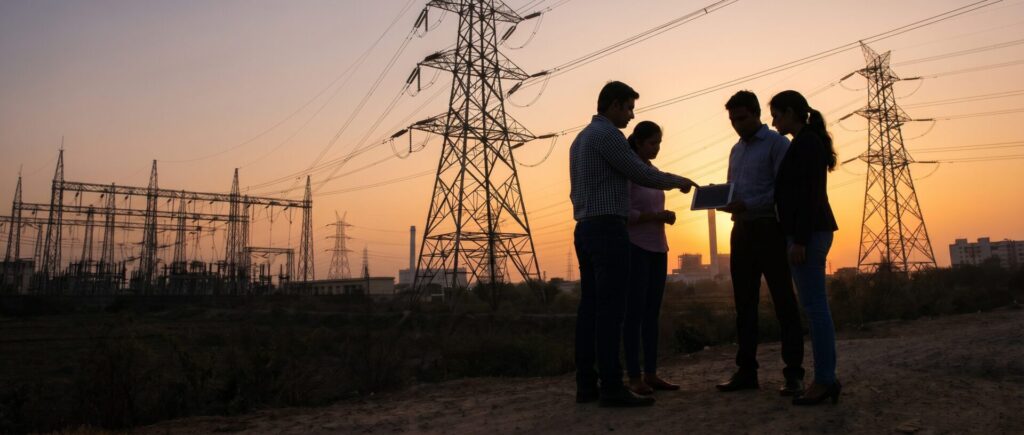

Across events, articles, and industry conversations, one theme is abundantly clear: the future of our digital infrastructure is directly tied to the future of our power grid.
As AI, cloud computing, domestic manufacturing expansion, and electrification accelerate, the energy industry faces a critical challenge. Utilities and power providers must deliver reliable, affordable power at the speed and scale required to support rapidly growing demand.
Grid infrastructure is being pushed to its limits. Interconnection timelines now stretch into years. Transmission expansion remains slow and capital-intensive. Planning processes were not built for the speed and scale of today’s growth.
The result is a widening gap between when customers need power and when it can be delivered. For industries whose power needs are rapidly increasing, that gap is becoming untenable. A new operating model is emerging—one that accelerates speed to power and compliments available grid capacity by introducing flexibility to the load, rather than waiting for the grid to respond. This approach can include onsite generation, battery storage, and workload flexibility.
The shift toward flexibility is gaining momentum across the industry. Efforts like the EPRI Flex MOSAIC initiative reflect a growing alignment among data center operators, utilities, policymakers, and technology providers. The initiative has a clear premise: large loads must operate more flexibly with the grid, and stakeholders must incorporate flexibility into power delivery from the outset.
Flex MOSAIC is a coordinated effort to establish a consistent framework for how large loads like data centers can operate more flexibly with the grid. The initiative aligns infrastructure, operating models, and market mechanisms to support rapid load growth without compromising system reliability. It also standardizes how flexibility is defined, measured, and integrated across regions—a key step toward scalable adoption.
These developments reflect a period of change in how large electrical loads interact with the grid.
Transforming large loads from grid constraint to grid asset
The Flex MOSAIC initiative is founded on the principle that large loads must transition from passive electricity consumers to active participants in the power system—without compromising growth.
As developers build data centers to meet unprecedented compute demand, supporting infrastructure often cannot be deployed at the same pace. Onsite dispatchable generation, a central component of Flex MOSAIC, helps close that gap by enabling a more flexible operating model that supports grid needs without disrupting data center operations.
By co-locating generation with load, data centers can secure immediate access to bridge power while laying the foundation to operate flexibly with the grid over time. They can eliminate utility imports during peak periods and extended system-stress events, and, in some cases, export power back to the grid.
Flex MOSAIC highlights the need to integrate these resources with grid operations, enabling coordinated response rather than isolated action. This ability to shift from grid burden to grid support represents scalable flexibility in action.
Aligning resources with the future of power delivery
The digital economy is reaching a critical point where managing rapid load growth requires more than incremental change. As highlighted in EPRI’s open letter, the industry must establish standardized, transparent, and practical frameworks that define how large loads provide flexibility in a way that utilities, operators, and developers can rely on.
Today, that consistency does not exist. Each project is evaluated as a unique case, creating uncertainty around available flexibility, measurements standards, impacts on reliability and reserve margins, and interconnection timelines. This lack of alignment slows deployment, increases costs, and limits the ability to scale.
ERock’s approach is designed to address these challenges through a proven business and operating model:
Flexibility moves from concept to capability through solutions that are deployable today, scalable across regions, and aligned with the needs of both the grid and the ratepayers it serves.
Delivering speed to power today
ERock has deployed its flexibility model across more than 400 sites nationwide, representing a gigawatt of capacity and supporting some of the most power-intensive environments. Our systems have delivered high levels of reliability in operating environments, enabling customers to utilize onsite power during thousands of grid support events. What is changing is the scale and urgency at which these capabilities are needed.
As data center demand accelerates, speed to power and operational flexibility have become strategic priorities for operators. ERock’s full project commissioning is typically achieved in 12 to 18 months and can ramp up monthly from there, giving data center operators a practical path to scale power in step with rising demand.
These capabilities are not conceptual. They are proven in real-world operating environments at scale and are being deployed at scale today.
Building the future of power and infrastructure
EPRI’s announcement of Flex MOSAIC during CERAWeek 2026 signals the importance of large load flexibility—it is no longer a niche issue. The solution is central to the energy system’s ability to support the rapid growth of data centers and digital demand.
Coordination across the industry is imperative. The market will require new frameworks that leverage proven operating models and integrate flexibility into load and supply planning. The path forward is clear: flexibility is key to greater reliability, speed to power, and intelligent operations.
Dispatchable onsite power will play a critical role in making flexibility a practical approach. It is not just an enabler of growth, but a foundational component for building, scaling, and sustaining the next generation of infrastructure.
This article was originally published on LinkedIn.