
[datacenter_tag_image]
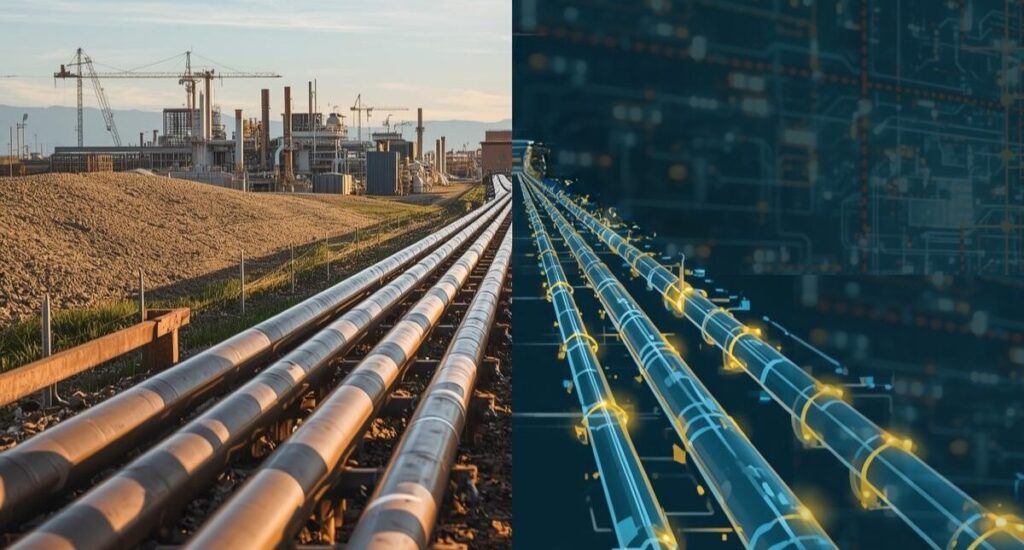

If you’ve been following headlines about AI-driven load overwhelming the grid, lengthy interconnection queues, and looming reliability shortfalls, you might think the sky is falling.
But the grid is not broken. It is evolving. What has changed is the pace and shape of new load growth, which no longer align neatly with traditional infrastructure planning models.
Electric load growth is accelerating at a pace few anticipated just a decade ago. AI-driven data centers, electrification trends, advanced manufacturing, hydrogen development, and continued renewable buildout are all pushing demand higher. At the same time, grid interconnection timelines in many regions now stretch three, four, even five years. Utilities are increasingly offering interruptible service structures. Renewable penetration continues to expand, bringing valuable clean energy to the system, but also intermittency that must be managed. These forces are reshaping how reliability is delivered and accelerating the search for practical, near-term solutions like flexible capacity.
Reinforcing the grid through dispatchable flexibility
Flexible onsite generation has stepped into a new role, not as a competitor to the grid, but as a partner. Flexible natural gas generation is increasingly serving as a reliability shock absorber for the modern system. It firms up solar and wind installations when output falls. It supports customers that can only secure interruptible grid connections. It bridges multi-year interconnection backlogs, so projects can move forward instead of sitting idle. And for mission-critical facilities, it provides protection against volatility and outage risk.
In many cases, flexible capacity is not replacing the grid. It is enabling growth that otherwise would not happen. However, as the power market has evolved, the natural gas market has largely remained structured around legacy assumptions. That needs to change.
Resolving the structural gap between power and fuel
Electric markets dispatch in real time, responding instantly to price signals and reliability needs. Gas markets, by contrast, are still predominantly designed around day-ahead scheduling, ratable flows, rigid nomination cycles, and seasonal contract structures. That framework made sense when load profiles were predictable and baseload generation dominated the system. It is less aligned with a world where generation assets may run at full output for 48 hours and then sit idle for days.
If natural gas is expected to serve as the reliability backbone of an increasingly renewable-heavy grid, then fuel supply structures must evolve alongside the power markets they support. This is not an argument against pipeline discipline or operational integrity. Rather, it is an acknowledgment that flexibility has become a reliability attribute.
Delivering that flexibility will require alignment among pipeline operators, local distribution companies, third-party marketers, power developers, and regulators to modernize both commercial frameworks and operational protocols. There is opportunity here.
Building fuel flexibility into an evolving grid infrastructure
Expanded no-notice services, more dynamic hourly balancing mechanisms, hybrid physical and financial supply products, and flexible park-and-loan structures are practical pathways to better align gas supply with real-time, modern dispatch realities.
No-notice services allow generators to ramp fuel usage up or down without prior scheduling, which is a critical capability for assets responding to real-time grid signals. More dynamic hourly balancing would reduce penalties for short-duration deviations that reflect actual power market volatility rather than operational mismanagement. Hybrid physical and financial products could combine firm transportation rights with market-based flexibility, allowing generators to manage both reliability obligations and price exposure. Similarly, modernized park-and-loan structures could provide short-term operational elasticity without requiring full ratable commitments.
Beyond these operational tools, the development of capacity products specifically designed for flexible generation, rather than traditional baseload assumptions, could further bridge the gap between legacy gas delivery models and the dynamic behavior of the real-time electric market.
Aligning power and fuel supply for the next era of growth
The grid has entered a new phase driven by structural shifts in how electricity is produced, delivered, and consumed. Data center development continues to accelerate. Electrification is expanding across industries. And renewable deployment will continue to grow as technology, policy, and markets align. In this evolving landscape, flexible onsite generation has emerged as a critical stabilizing force that can support reliability while enabling this transition.
For natural gas to maintain its role as the reliability partner for the future grid, its fuel supply system must evolve alongside it. Flexibility, responsiveness, and operational alignment will become as important as capacity itself, which means the grid of tomorrow will be more dynamic, more distributed, and more interconnected than ever before. The fuel systems behind it must move just as quickly to power the next era of growth.
This article was originally published on LinkedIn.