
[datacenter_tag_image]
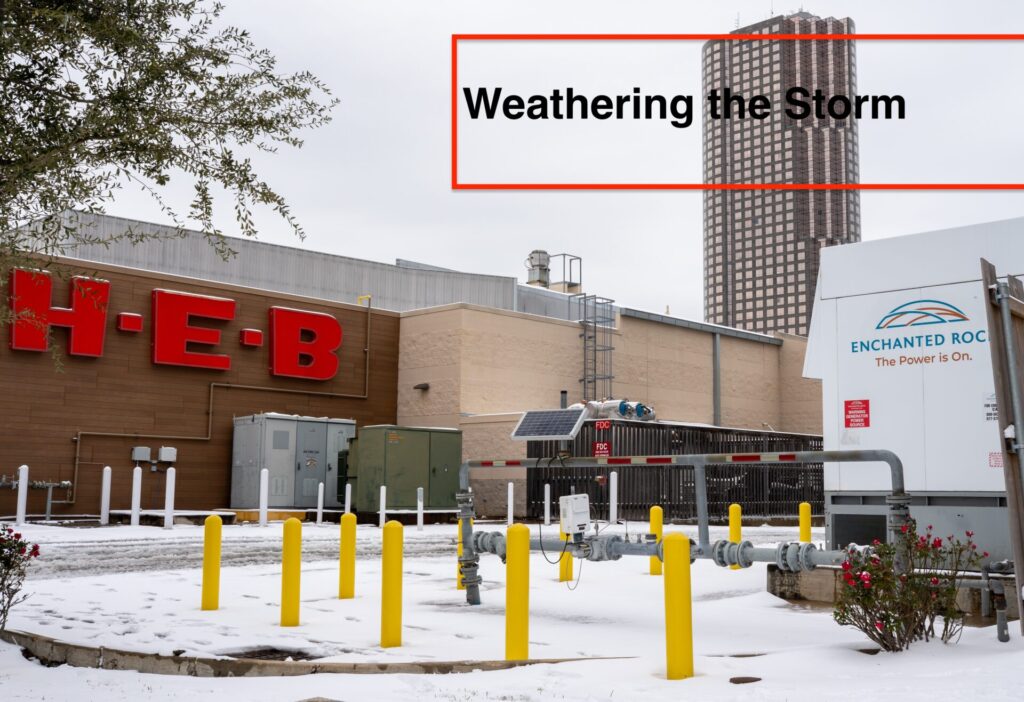

Nearly five years ago, a rare winter storm barreled toward Texas and several surrounding states, bringing with it the prospect of widespread power outages and major impacts to the grid infrastructure across the region. The operations team was on high alert, preparing for the long hours ahead and ensuring personnel and equipment were ready to go. Just as there were zero doubts that Team ERock would deliver in 2021, we knew the team would rise to the moment once again as Winter Storm Fern approached in January 2026.
When Winter Storm Uri struck Texas in February 2021, it exposed deep vulnerabilities across the state’s power system. Extreme cold overwhelmed generation, fuel supply, and transmission infrastructure, leaving more than 4 million Texans without electricity and causing widespread disruptions for businesses, hospitals, and critical services. Uri was a defining moment for Texas. But it was also a wake-up call for the entire energy industry, forcing a hard reckoning with how infrastructure performs under truly extreme conditions.
In the years that followed, significant effort went into hardening the grid. Power plants weatherized equipment, fuel supply coordination improved, and grid operators refined emergency protocols. While Winter Storm Fern was deemed a major threat, Texas was far better prepared than it had been during Uri. Still, the state wasn’t immune to risk. Forecasts called for ice accumulation that threatened transmission and distribution infrastructure, and that’s precisely the type of damage that can cause extended outages even when generation supply is stable.
ERock delivered on our promise of reliable power during Uri. And for Winter Storm Fern? We kept our customers up and running as well, and the event reinforced an important truth: extreme weather doesn’t demand a fundamentally different playbook. The system design, preparation, and execution required to perform during a storm are the same disciplines we rely on no matter what Mother Nature throws our way. While storms may bring longer hours and heightened coordination, there is no secret contingency plan that gets activated when the forecast turns cold. Our ability to deliver reliable power is built into how we operate year-round.
System design matters when you can’t control conditions
Reliable performance during extreme weather starts with purpose-built system design. Our microgrids are anchored by ultra-clean, natural gas generators and connected directly to utility pipeline networks, which is much more dependable than traditional diesel, storm or no storm. Natural gas offers a continuous fuel supply that isn’t constrained by fuel deliveries or onsite storage during emergencies, and this ensures our systems are ready to run for extended outages no matter how long they last.
Beyond fuel security, our generators are designed to minimize exposure to storm-related risks. Critical electrical components are hardened and, where possible, installed underground to protect against wind, ice, and debris that commonly disrupt surface infrastructure. Advanced controls continuously manage system performance, while equipment is specified and tested to operate reliably across extreme temperature ranges, from severe cold to intense heat.
These design choices are intentional and proven. By combining resilient fuel supply, hardened infrastructure, and intelligent controls, our systems deliver consistent, uninterrupted power when traditional infrastructure is most vulnerable.
Reliability starts long before the forecast
Preparation is the foundation of everything we do. As part of our end-to-end service, Enchanted Rock performs comprehensive, fleet-wide maintenance designed not just to meet OEM recommendations, but to exceed them where real-world operating conditions demand it. Extreme weather exposes the gaps between theoretical maintenance schedules and how equipment actually behaves under stress. That’s why we continuously analyze performance data across hundreds of thousands of operating hours to maximize efficiency in our maintenance approach.
Our teams proactively inspect, test, and service systems to identify potential failure points before they become problems. This includes deeper diagnostics, frequent inspections, and targeted upgrades based on observed field performance, not assumptions. But preparation isn’t just procedural; it’s cultural. Reliability doesn’t live in a checklist. It lives in the people responsible for executing the work.
From technicians to engineers to operations staff, our teams are trained to think critically about system performance and to take ownership of outcomes. That culture, which is where accountability, attention to detail, and continuous improvement are expected, ensures our systems aren’t being pushed beyond their limits for the first time when severe weather arrives.
Real-time execution delivers real reliability
When Winter Storm Fern arrived, disciplined execution at the system level was critical. Throughout the event, our 24/7 Microgrid Control Center (MCC) provided centralized oversight of our entire fleet, including system telemetry, breaker status, and load levels alongside the evolving weather.
As grid disturbances occurred, our systems automatically transitioned to operate independently, with generators coming online within seconds to keep power flowing. MCC operators closely monitored system performance and customer demand, making real-time adjustments to ensure steady operation throughout extended outages. By continuously matching generation to load, systems ran smoothly over multi-hour and multi-day events while minimizing stress on equipment.
In parallel, the MCC maintained situational awareness of broader grid conditions, including transmission outages and regional capacity constraints. When needed, generators were dispatched to provide capacity support to @ERCOT, operating for more than 4,500+ combined hours during Winter Storm Fern to help stabilize the grid during peak stress. This mix of automation, real-time oversight, and operator-driven decision-making allowed systems to perform continuously, even as external infrastructure was challenged.
Storm‑ready performance starts with everyday preparedness
Thankfully, in Texas, Winter Storm Fern did not result in the widespread, prolonged outages seen during Uri. Still, our systems were called into action. During the storm, we supported more than 44 customer outages, delivering nearly 160 hours of backup power to keep operations running, with some sites running for more than 42 consecutive hours.
Even without widespread outages, Fern reinforced the reality that extreme weather doesn’t have to become a crisis when systems are built and operated with resilience in mind. This certainly won’t be the last time Texas or any other region faces extreme weather that tests its energy infrastructure. But as with every storm before, Enchanted Rock will be ready. Not because we react differently when the forecast turns severe, but because we design, prepare, and execute with reliability in mind every single day.
This article was originally published on LinkedIn.